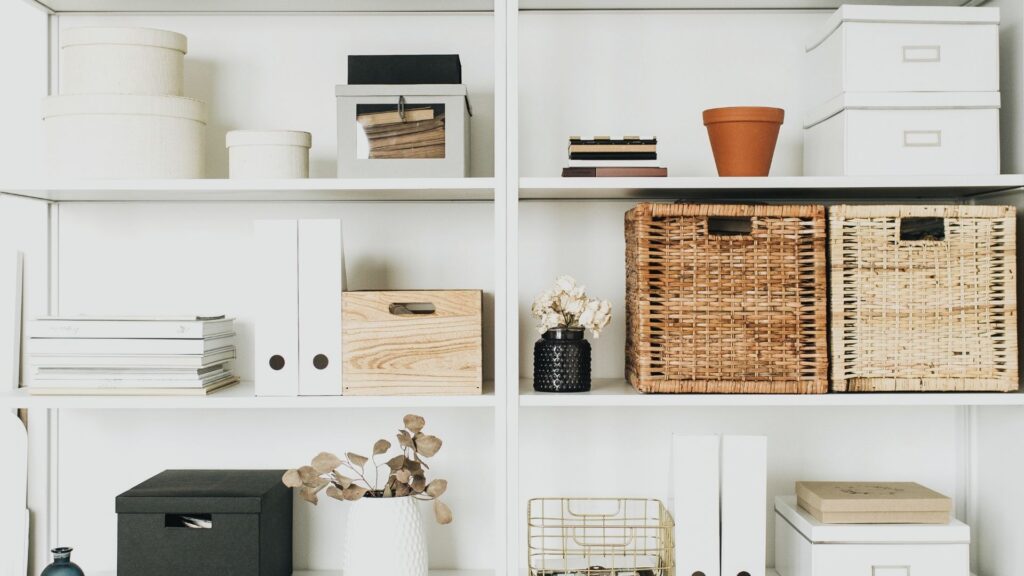

Have you ever opened a closet, looked at everything inside, and closed the door because it felt too hard to let go of any of it?
Or picked up something you haven’t used in years, considered getting rid of it, and then put it right back?
Maybe it was expensive. Maybe someone gave it to you. Maybe you can’t explain why you’re keeping it, but something about letting it go doesn’t feel right.
I’ve learned that our relationships with our belongings are rarely as straightforward as deciding what stays and what goes.
Sometimes it’s about memories. Sometimes it’s guilt, family expectations, or money we’ve already spent.
And sometimes we simply have a lot of stuff.
The interesting part is what happens when we start asking why.
Why It’s Hard to Let Go: What’s Actually Going On
There are a few reasons this is hard, and most of them have nothing to do with being messy.
We value things more once they’re ours. Psychologists call it the endowment effect. The moment something lives in your home, it feels worth more to you than it would on a store shelf.
We hate wasting money. If you paid a lot for it, getting rid of it can feel like admitting a mistake. The money is gone either way. Keeping the item doesn’t bring it back.
Objects hold more than themselves. A sweater can be a person, a season of your life, or the version of you who was going to wear it again. Letting go of the object can feel like letting go of all of that.
Deciding is tiring. Every item is a small decision. Make enough of them in a row and anyone starts saying “later” to everything.
None of this means something is wrong with you. It means you’re human, and knowing which one is at work usually makes the decision easier.
Holding Onto Things We Don’t Use
Think about something in your home that you don’t particularly like, use, or even want anymore.
Maybe it was a gift from someone you care about.
You appreciated the gesture. You thanked them. But the item itself? Not really your taste.
And yet, years later, there it sits.
Every time you see it, you’re reminded that you don’t want it, followed almost immediately by the guilt of considering getting rid of it.
Now that object is taking up more than physical space.
It’s taking up emotional space, too.
This is something I discuss with clients regularly.
I might ask:
- When was the last time you used this?
- Do you still enjoy having it?
- Can you realistically see yourself using it again?
- If you didn’t already own it, would you bring it into your home today?
Sometimes the answer is an immediate yes. Great! We find a place for it.
Other times, the answer requires a little conversation.
I’m not asking these questions to convince someone to discard something. I’m asking because understanding why we keep things helps us make better decisions about what belongs in our homes.
“We’re Caribbean. We Don’t Get Rid of Things.”
I recently worked with a client in Georgia whose sister was visiting during our organizing session.
When I arrived, the sisters gave me a warning.
“Just so you know, we’re Caribbean, and we don’t get rid of things. You’re going to have a hard time getting her to let anything go.”
I explained something I wish more people understood about professional organizing.
I’m not there to make anyone get rid of anything.
That’s not my job.
I’m there to help my clients look at their belongings, understand how those items fit into their lives, and make decisions that feel right for them.
I ask questions. I offer perspective. I help them consider possibilities they might not have thought about.
But ultimately, the decisions belong to them.
As we worked, we talked, laughed, and exchanged stories. My client shared experiences connected to certain belongings and explained why she’d kept them.
Those conversations gave me insight into what mattered to her. They also gave her an opportunity to reconsider whether certain things still deserved a place in her home.
And in less than two hours?
Three enormous black contractor bags filled with clothing and shoes she had decided she no longer wanted.
Three. Large. Contractor. Bags.
I hadn’t pressured her to part with a single item.
She made those decisions herself.
That’s one of my favorite things about this work. Sometimes a person who was convinced they couldn’t let go of anything discovers that they’re actually quite comfortable doing so once they have the opportunity to think things through without judgment.
And sometimes they decide to keep something.
Both are perfectly acceptable outcomes.
Keeping Something Out of Guilt Isn’t the Same as Treasuring It
There’s an important difference between keeping something because you love it and keeping something because you feel obligated to.
A gift is a good example.
You can love the person who gave you something without loving the object itself.
You can appreciate the thought behind a gift without displaying it in your home for the next 20 years.
And you can honor someone’s memory without keeping every possession they left behind.
That last one can be particularly difficult.
When belongings are connected to someone we’ve lost, decisions about those items can feel much bigger than the objects themselves.
A piece of furniture might remind you of childhood visits. A collection might represent years of someone’s interests. Even ordinary household items can carry memories.
There’s no universal rule about what you should keep.
What matters is giving yourself permission to decide which belongings genuinely hold meaning for you and how you want to preserve those memories.
Sometimes that’s through keeping an object.
Sometimes it’s through a photograph, a story, or passing something along to someone who will appreciate it.
And sometimes it’s simply acknowledging that an item served its purpose and you’re ready to let it go.
What If You Don’t Want to Get Rid of Anything?

Then we work with that.
Seriously.
Professional organizing isn’t synonymous with minimalism, and I don’t believe everyone should aspire to own as little as possible.
Some people love collections. Some have hobbies that require equipment and supplies. Some enjoy displaying meaningful objects throughout their homes.
Others prefer clear surfaces, fewer possessions, and everything tucked away.
Neither approach is inherently better.
The question is whether your home supports the way you want to live.
If you love your collection, let’s find a beautiful way to display it.
If you need certain things visible because that’s how you remember to use them, let’s create a system that accommodates that.
If you want to keep sentimental belongings but don’t need to see them every day, we can explore storage options that protect them and make them accessible.
And if you’re tired of moving the same unwanted items from one room to another, perhaps it’s time to have a conversation about why they’re still there.
The goal isn’t to make your home look like someone else’s.
It’s to make it work for you.
An Organized Home Should Look as Good as It Functions
I care about how a home functions, but I also care about how it looks. The two should complement each other.
I want my clients to enjoy their surroundings. Whether their style is modern and minimalist, traditional and richly layered, or somewhere in between, their home should reflect their personal taste.
A closet should be easy to navigate and visually appealing. A kitchen should make everyday routines easier without sacrificing its appearance. Living spaces should reflect the personalities and preferences of the people who live there.
Those things aren’t mutually exclusive.
But I’ve also seen organizing solutions that look wonderful in photographs and make absolutely no sense for the person using them.
What’s the point of a beautifully arranged kitchen if you have to move six things just to make breakfast?
Or a perfectly coordinated closet where you can’t find the shirt you’re looking for?
An effective organizing system considers your routines, your preferences, the way you move through your home, and what you find visually appealing.
That’s why I don’t walk into someone’s house with a predetermined formula.
I pay attention. I ask questions. I learn how they live.
Then we create something that makes sense for them.
If you’re curious about what that process looks like, you can explore my In-Home Reset & Decluttering services.
Sometimes the Hardest Part Is Making the Decisions
People often assume that organizing is primarily about putting things away.
But deciding what to do with everything can be the most demanding part of the process.
Keep it? Donate it? Sell it? Store it? Give it to a relative? Move it somewhere else?

Now multiply those decisions by an entire closet, garage, or household.
It’s a lot.
And when you’re already managing a demanding career, family responsibilities, or a major life transition, those decisions can become one more thing you don’t have the time or energy to address.
That’s where having an experienced professional alongside you can make a difference.
I can help identify categories, establish priorities, suggest options, and keep the project moving.
I can also recognize when something deserves a longer conversation and when a decision is relatively straightforward.
Not every item needs a philosophical discussion.
Sometimes you really can just get rid of the broken toaster.
For clients who feel stuck because their home no longer functions the way it should, my Home Reset & Organizing services address both the decisions and the systems needed to maintain the results.
You Don’t Have to Figure It All Out Alone
I’m Dafina, and I’ve spent more than 11 years helping people organize homes, navigate relocations, and manage significant household transitions, primarily in the San Francisco Bay Area. Today, through OCbyD (Omnia and Clarity by Dafina), I bring that experience to clients throughout Henry County and South Metro Atlanta, while continuing to serve select Bay Area clients.
I’ve worked with people who were ready to let go of almost everything and people who initially couldn’t imagine parting with anything.
Neither situation intimidates me.
Because I don’t arrive with a list of things you need to get rid of.
I arrive ready to understand what you need, what matters to you, and what would make your home easier and more enjoyable to live in.
And sometimes, along the way, we end up laughing, exchanging stories, and filling three enormous contractor bags.
You never know.
Frequently Asked Questions About Letting Go of Things
Why is it so hard to let go of things?
Because belongings are rarely just belongings. They can represent memories, relationships, money we’ve spent, or who we used to be. Often the difficulty isn’t whether something is useful. It’s what the item means and whether we still want it in our lives.
How do I let go of sentimental belongings without feeling guilty?
Start by separating the memory from the object. You can appreciate a gift, honor someone you love, or remember an important chapter of your life without keeping everything tied to it. Photograph certain items, share them with family, or choose a few meaningful pieces to keep. If you’re not ready to decide, that’s okay, too.
Can a professional organizer help if I don’t want to throw anything away?
Yes. My role isn’t to make you get rid of things. I help you evaluate your belongings, understand your priorities, and create a home that works for you. If you want to keep something, we’ll explore how to make room for it.
What should I do when I’m overwhelmed by the thought of decluttering?
Don’t start with the whole house. Choose one small area and make a few decisions at a time. If you keep getting stuck, notice whether it’s the number of items, the decisions, or the emotions attached to certain things. That tells you where to begin.
Ready to see what your home could look and feel like with the right support?
OCbyD offers personalized home organizing, decluttering, home resets, relocation management, and life transition support throughout Henry County and South Metro Atlanta, with select Bay Area and travel projects available.
Book a Complimentary Consultation and let’s talk about what you need handled.