
When you’re downsizing, going through a divorce, or managing a home after losing someone, there can be a lot coming at you at once. Decisions about the house and everything in it arrive while you’re still taking in what has changed. The realtor needs an answer. Family members have questions. There are appointments, belongings to sort, and a timeline that may not leave much breathing room.
After more than 11 years of organizing homes, managing moves, and supporting people through transitions, I know how much it helps to have someone who can listen, make a plan, and follow through. My approach to home transition support combines a clear plan, hands-on work, and room for the decisions that take more time. Here’s what that support looks like for people in Henry County and South Metro Atlanta.

It starts with a conversation
Before we start sorting anything, we talk. What needs to happen? Is there a move date or a deadline to prepare the house? What have you already decided, and what still feels difficult? You don’t need to have every answer before I arrive.
I want to understand what matters to you and what you’re ready to tackle. Some people want to tell me the story behind their belongings. Others would rather focus on the work. There is room for both. You can share what you’re comfortable sharing, and we work from there.
If a question needs an attorney, an appraiser, or another specialist, I’m direct about that. I can help identify the next step and coordinate around their guidance so the practical work can continue.
Making a plan and taking work off your plate
You shouldn’t have to keep every detail in your head or direct every task yourself. Once we agree on the plan, I manage the work within my scope, coordinate the next steps, and follow through. I keep you informed and bring decisions to you when your input is needed, so you can stay involved without managing the entire process.
We also look at the order things need to happen. If furniture is going to a family member, when can they collect it? If some belongings are going into storage, which items need to stay accessible? What do you need to keep using until moving day? These details affect how we sort and prepare the house.
Breaking the decisions into manageable pieces
A house full of belongings can feel like one enormous decision. We make it smaller by working through a category or area at a time. Depending on the project, that might mean starting with the kitchen, a collection, or furniture that needs a destination before the move.
The categories reflect your circumstances. Some belongings may go with you to the new home. Others may go to storage, to family, to consignment, or to donation. If you’re splitting a move between locations, we make those destinations clear too.
There will be things you aren’t ready to decide about. We identify those and set them aside deliberately so they don’t stall every other decision. I give you space, and I’m also honest about what needs attention to meet the timeline. We can acknowledge that a decision is difficult and still find a useful next step.
For more on why belongings can become harder to manage during major changes, read Why Life Transitions Often Create Clutter (And What to Do About It).
A clear system between sessions
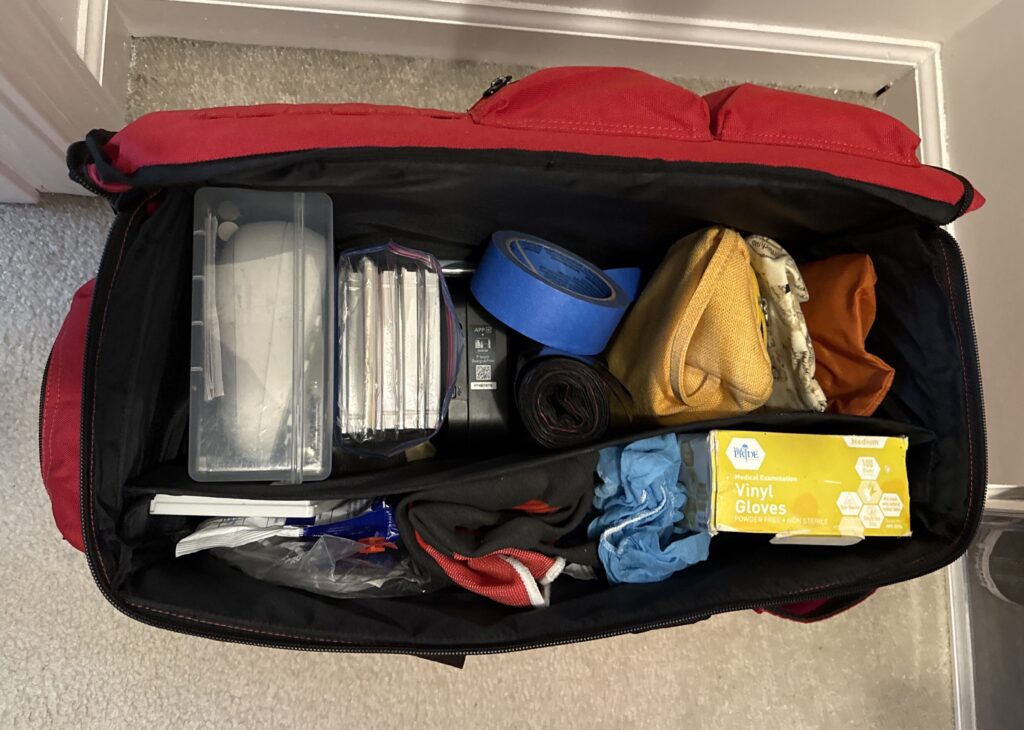
Some clients want to continue between sessions. When that works for the project, I leave a simple system we’ve agreed on together: colored dot stickers, blue painter’s tape, and a legend that explains what each color means.
For example, one color might identify items going to the new home, while another marks items going to storage. The exact categories depend on where your belongings are headed. The point is to make decisions visible without having to repeat the same conversation about every item.
We agree on which areas you can work through on your own. And if you change your mind, that’s okay. Leave a sticky note explaining the change so I can update the plan at the next session. Clear communication keeps the sorting, records, and next steps aligned.
Keeping track of where everything is going
For projects with several destinations, I use a spreadsheet to keep a running record. It can show what’s going to the new house, what’s going into storage, what a family member is taking, and what still needs a decision or follow-up.
As we work, I add information and update changes. That gives us a place to check the plan instead of relying on memory, scattered messages, or a label someone may have moved. It also helps us see what still needs to happen before pickup or moving day.
When other people are involved, we can use the record to keep the relevant details clear. We agree on who needs that information and what should be shared.
Knowing when to take a break
Sorting a home takes energy. You’re lifting, moving, remembering, and making decisions, sometimes about things you haven’t touched in years. It can be more draining than you expect.
I pay attention to that. Sometimes we can switch to an easier category. Sometimes you need water, something to eat, or a break. If you’re tired at the end of a session, you don’t need to turn the rest of your evening into homework.
My job includes helping set a workable pace. We keep the deadlines in view while making room for the person living through the transition.
If the decisions and unfinished tasks are weighing on you, I share more about that in Can Organizing Help Reduce Stress?.
Support when you need a way forward
You may already know you need to move but have no idea where to start with the belongings. Perhaps you’re helping a parent downsize, navigating a separation, or managing an inherited home while trying to handle your own daily life. You don’t need to sort everything out before asking for help.
OCbyD provides estate and life transition support across Henry County and South Metro Atlanta, including Stockbridge, McDonough, Hampton, Locust Grove, and Eagle’s Landing. If you’re a realtor, attorney, or advisor, I can also discuss practical support for a client facing a home transition.
A complimentary consultation gives us a chance to talk about what’s happening, what needs to get done, and where I can help. We start with what you know and work out the next steps together.
