
What Actually Happens After Your Professional Organizer Leaves (And Why Nobody Talks About It)

After hundreds of projects spanning organizing, unpacking, corporate organization, downsizing support, move support, and home resets, I’ve learned something about what happens after a professional organizer leaves that almost nobody talks about.
People think the organizing session is the finish line.
It isn’t.
It’s the beginning.
The real test isn’t whether your home looked beautiful the day I left.
It’s whether your systems still support you on an ordinary Tuesday, three weeks later, when you’re tired, running late, and life has gone back to normal.
That’s where truly thoughtful systems prove their value. And after years of watching clients settle into their homes, I’ve learned that the homes that continue to work aren’t the ones that stay picture-perfect. They’re the ones with systems designed for real life.
The Myth of the Finished Project
Most people think of organizing the way they think of a haircut. You show up, someone does the work, you leave looking different, and that is the end of the transaction. I understand why. It is how the industry markets itself. Before and after photos. Dramatic reveals. A closet that looks like a boutique.
But a closet is not a haircut. Hair grows back on its own schedule and mostly does not require your input. A home requires your input every single day, multiple times a day, whether you are thinking about it or not. Every time you put something down, every time you decide where a new item goes, every time you are tired and just want to deal with it later, you are either reinforcing the system I built with you or quietly dismantling it.
Nobody explains that part at the consultation. So when it starts to slip a little, clients often think something went wrong. It did not go wrong. It went exactly the way every new habit goes when the person who built it stops being in the room.
The Three Weeks That Actually Matter
Here is what I have noticed after hundreds of projects. The first three weeks after I leave are not about whether the system is good. This is also why buying more after organizing isn’t automatically a problem. My systems are good. That is not me being immodest; that is me having done this long enough to know the difference between a system that looks nice and one that actually functions for how a specific person lives.
The first three weeks are about whether the client can catch themselves.
That is the real skill I am trying to hand off, and it has nothing to do with bins or labels. It is the moment when you go to put something down in the old spot out of habit, and you catch yourself mid motion, and you correct it. That catch is everything. The first time it happens, it feels effortful, almost annoying. By the third or fourth time, it starts to feel automatic. That is the window where a system either becomes part of how you live or becomes a very nice photo from a day your house looked amazing.
I tell clients this directly, usually on the last day of a project. I do not sugarcoat it. I say something to the effect of, “The next three weeks are going to test this, and it is going to feel harder than today did, and that is normal, not a failure.“
What I Actually Build For the After
Because I know this window exists, I do not build systems for how a home looks on the day I leave. I build for how a person actually behaves on their worst, most exhausted Tuesday.
This changes almost everything about how I approach a project. If a client tells me they are extremely tidy and always put things back exactly where they belong, I still design the system for the version of them that is running on four hours of sleep, coming home after a long workday, caring for a sick pet, navigating a major life transition, or simply feeling overwhelmed. Because that version of them is going to show up eventually, and if the system only works for the best-case version of a person, it was never going to hold.
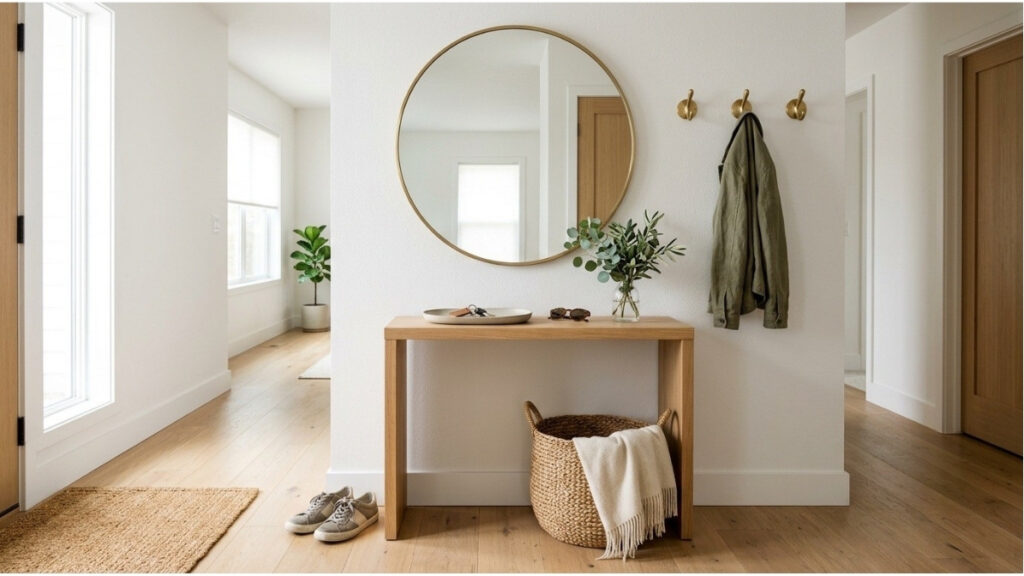
Practically, this means I ask a lot of unglamorous questions. Where do you actually drop your keys when you walk in, not where do you wish you dropped your keys. What do you do with mail before you have decided what to do with it. What is the actual first move when you take off your shoes, your coat, your bag. I am not organizing the aspirational version of a home. When your home works with your daily routines instead of against them, it often feels calmer and less overwhelming. I am organizing the true one.
The Handoff Conversation Nobody Has
Most organizing engagements end with a walkthrough and a goodbye. I do something different, and it is probably the single change that has done the most for my client retention and results.
Before I leave a project, I have what I call the handoff conversation. It is not long, maybe fifteen minutes, but it covers three things every time.
First, I tell them exactly where I expect things to get tested. Not in vague terms, but specifically. I will say something like: The mail system is going to be the first thing to slip, because that is where I see it slip for almost everyone. So when it starts piling up again, do not panic and do not think the system failed. Just reset it that same day instead of letting three days become three weeks.
Second, I give them a very small, very specific reset ritual. Not a full maintenance plan, because nobody follows a full maintenance plan. One five minute action, tied to an existing habit they already have, that resets the highest risk area. For a lot of clients this is something as simple as, before you sit down after dinner, put back anything that migrated during the day.
Third, and this is the part almost nobody does, I tell them when to call me. Not if things get messy again, because things getting a little messy again is expected and normal. I tell them the specific signal that means it is time to bring me back in, versus the normal noise of daily life. Usually it is something like, if you find yourself avoiding a space entirely instead of just letting it get a little cluttered, that is different, and that is when we talk.
Why This Matters More Than the Bins
I say all of this because I think the organizing industry, myself included in earlier years, oversells the moment of transformation and undersells the maintenance of it. It photographs better. A well-organized closet gets shared. A text message three weeks later that says it is slipping a little does not.
But that text is not a failure. It is data. It tells me exactly where the system needs a small adjustment, not a full overhaul. Most of the time, it is a five-minute fix. Move a bin six inches closer to where the item actually gets used. Add one more small container because life changed. A new pet, a new job, a move, a health challenge, a different routine, or simply a busier season can all change how a home functions.
I have worked with clients whose homes I organized years ago who still text me a photo when something starts to drift, half joking, half checking in. I love those texts. They mean the relationship outlasted the project, which was always the actual point.
The Real Job Description
If I am honest about what a Home Reset Specialist actually does, it is not organizing things. It is building a system flexible enough to survive contact with a real, tired, busy human life, and then staying close enough to that person that when the system needs a tweak, they know exactly who to call and exactly what to say.
The before and after photo will always be the marketing. But the after the after, the quiet weeks and months where a system either becomes second nature or becomes a memory, that is the actual work. That is where I try to spend my attention, long past the day I pack up my organizing kit and drive away.
If you are working with a professional organizer or thinking about hiring one, my advice is the same either way. Don’t judge the project by the day it ends.
Judge it by the Tuesday three weeks later.
That’s the day that tells you whether your home is truly supporting your life.
And if it isn’t, it doesn’t mean you’ve failed. More often than not, it simply means your life has changed, and your systems should change with it.
If you’re looking for thoughtful systems designed for real life, OCbyD proudly serves clients throughout Henry County, GA, and South Metro Atlanta, with select San Francisco Bay Area projects available. Whether you’re organizing your home, preparing for a move, downsizing, or navigating a major life transition, the goal is always the same: creating a home that continues to support you long after the organizing session ends.