
10 Packing & Unpacking Mistakes That Make Moving Harder (And How to Avoid Them)
What 11+ Years of Helping Clients Move Has Taught Me
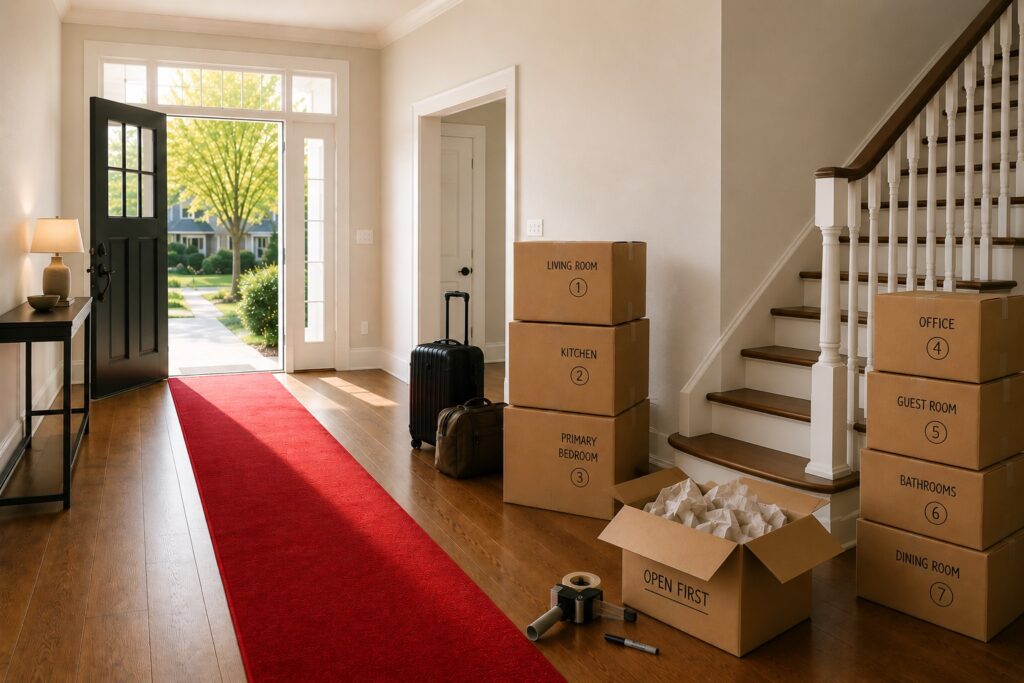
Moving is one of life’s biggest transitions. Whether you’re relocating across town or across the country, there are a lot of moving pieces, literally and figuratively. Between scheduling movers, transferring utilities, changing your address, and packing up everything you own, it’s easy to feel overwhelmed.
After more than 11 years as a Professional Organizer and Move Support Specialist, I’ve noticed something interesting. The moves that go the smoothest aren’t necessarily the ones with the biggest budgets or the largest moving crews. They’re the ones where people plan ahead and make intentional decisions before the first box is taped shut.
I’ve also seen the same mistakes repeated over and over again. The good news is they’re completely avoidable.
Here are ten of the biggest packing and unpacking mistakes I see, along with what to do instead.
1. Packing Everything Instead of Decluttering First
If I could give every person moving just one piece of advice, this would be it:
Declutter before you pack.
I can’t stress this enough.
One of the biggest mistakes I see is people packing things “just in case.” They know they don’t use the item anymore. They know they probably don’t want it. But instead of making a decision before the move, they postpone it.
Here’s what that costs you:
- You’re paying to pack it.
- You’re paying to move it.
- You’re paying with your own gas if you’re moving yourself.
- You’re paying with time to unpack it.
- Then you realize you still don’t want it.
Now you have to donate it, haul it away, recycle it, or find someone to take it.
You’re essentially paying twice (sometimes thrice!) for something you already knew you didn’t want.
Every box you eliminate before moving saves time, energy, and money later.
2. Pack for the Unpack, Not Just the Move
This is one of the biggest mindset shifts I teach clients.
Don’t pack just to get everything into boxes.
Pack for the unpack.
Every decision you make while packing affects how you’ll feel when you arrive at your new home.
Think ahead.
Ask yourself:
- What am I going to need during the first 24 hours?
- What will I need tomorrow morning?
- What will make this transition easier?
When you think this way, unpacking becomes far less stressful because you’ve already planned for it.
You’re making life easier for your future self.
3. Using the Wrong Boxes for the Wrong Items
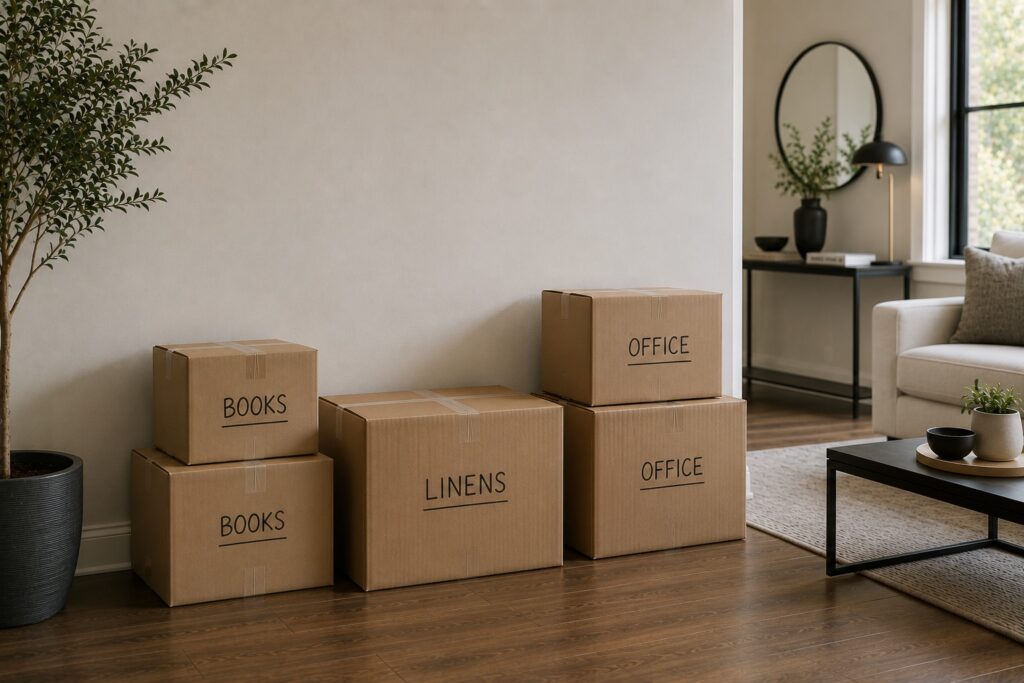
Not all moving boxes are created equal.
One mistake I see often is people putting heavy items into oversized boxes.
Books are the perfect example.
If you have an extensive book collection, don’t pack them in large boxes. Use small book boxes instead.
Large boxes full of books become incredibly heavy.
Not only are they difficult to lift, but they also increase the chances of boxes breaking or someone getting injured.
Before you buy supplies, think about what you’re packing.
Heavy items belong in smaller boxes.
Lighter, bulky items can go in larger boxes.
You’ll make everyone’s job easier, including your own.
4. Label Boxes by Room and Contents

A box labeled “Kitchen” doesn’t tell anyone much.
What part of the kitchen?
Coffee station?
Baking supplies?
Everyday dishes?
The more specific your labels are, the easier unpacking becomes.
This is especially important if someone else is packing for you.
Good labels save time because people know exactly where each box belongs without opening it.
Your future self will thank you.
5. Forgetting to Pack an “Open First” Box
One of the first questions I ask clients is:
“What will you need within the first few hours of arriving?”
That answer becomes the Open First box.
Think practical.
You’ll likely want:
- Toilet paper
- Hand soap
- Dish soap
- Paper towels
- Basic cleaning supplies
- Chargers
- Phone battery pack
- Medication
- Coffee or tea supplies
- A favorite mug
- Important documents
I also recommend packing several days’ worth of clothing in a separate bag, just in case unpacking takes longer than expected.
If movers are loading the truck, have your Open First box loaded last so it comes off first.
That simple step can save you from digging through dozens of boxes looking for toilet paper after a long moving day.
6. Forgetting About the Little Things That Matter Most
Some of the smallest items become the most important during a move.
Keep these with you whenever possible:
- Passports
- Identification
- Checkbooks
- Prescription medication
- Chargers
- External battery packs
- Keys
- Important paperwork
If you can’t transport them yourself, clearly mark them DO NOT PACK until you’re ready.
The last thing you want is to wonder which box contains your passport or phone charger after everything has been loaded onto the truck.
7. Expecting Movers to Do an Organizer’s Job

Let me say this because I think movers deserve more credit.
Movers are incredible at what they do.
Their job is to protect your belongings, transport them safely, and place furniture where you want it.
That doesn’t make them organizers.
Movers move. Professional Organizers create the systems that help your new home function from day one.
And honestly, they probably don’t want to unpack your kitchen, pantry, bathroom, or closets either.
Those are completely different skill sets.
If your goal is simply getting your belongings from one location to another, movers are exactly who you need.
If your goal is creating functional systems in your new home, that’s where a Professional Organizer comes in.
One more tip while we’re talking about furniture.
If you’re using area rugs, lay them down before furniture is placed.
It’s much easier to position furniture on top of a rug than it is to lift heavy furniture later just to slide the rug underneath.
8. Trying to Unpack Everything on Day One
One of the biggest unpacking mistakes I see is trying to finish everything immediately.
You don’t need every room completed on Day One.
Start with what supports daily living.
Focus on:
- Bedrooms
- Bathrooms
- Home office essentials
- Kitchen basics
- Coffee or tea station
- Cleaning supplies
- Laundry essentials
Once those spaces are functioning, everything else becomes much less stressful.
Progress beats perfection.
Every single time.
9. Forgetting About Moving Day Logistics
People spend weeks thinking about packing.
They don’t always spend enough time thinking about logistics.
Depending on where you live, you may need to:
- Reserve an elevator.
- Obtain a parking permit.
- Schedule loading dock access.
- Transfer utilities.
- Coordinate building move-in times.
- Notify property management.
- Hire a hauler for the items you want donated or discarded
These details can delay an otherwise smooth move if they’re overlooked.
The earlier you handle logistics, the easier moving day becomes.
10. Thinking You Have to Figure It All Out Yourself
Here’s something I tell clients all the time.
Moving isn’t difficult because you’re incapable.
It’s difficult because most people don’t move every day.
Professionals do.
There’s no shame in asking for help.
Whether that’s hiring movers, working with a Professional Organizer, or simply using a detailed moving checklist, having a plan makes all the difference.
If the entire process feels overwhelming, that’s exactly why Move Support services exist.
Sometimes the smartest decision isn’t doing everything yourself.
It’s having someone guide you through it.
Final Thoughts
There are always going to be unexpected moments during a move.
Take a deep breath.
Make a plan.
Think ahead.
Most importantly, remember that every decision you make while packing affects how you’ll feel while unpacking.
Declutter before you pack.
Label thoughtfully.
Pack for the unpack.
Protect your important documents.
And don’t be afraid to ask for help when you need it.
Moving doesn’t have to feel chaotic. With a little preparation and thoughtful systems, it can become the beginning of a home that supports the life you’re building.
Whether you need hands-on Move Support & Management, unpacking and organizing services, or prefer to prepare with my Digital Moving and Relocation Checklist and Home Inventory Tracker, I’d love to help make your next move smoother from start to finish.

