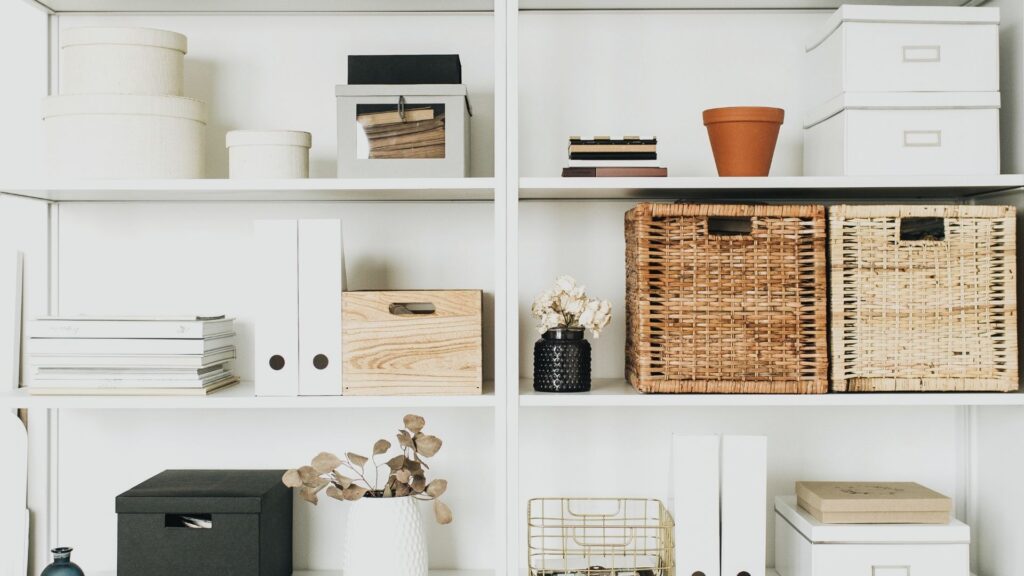
Can Organizing Help Reduce Stress?

Can organizing help reduce stress? The short answer is yes.The short answer is yes.
But probably not for the reason most people think.
When people imagine getting organized, they often picture matching bins, neatly folded towels, or perfectly labeled containers. While those things can certainly be helpful, the real reason organizing reduces stress has very little to do with appearances.
In my experience, stress decreases when people stop feeling overwhelmed by their space and start feeling supported by it.
Over the years, I’ve worked with clients through moves, downsizing, home sales, major life transitions, and overwhelming household projects. One thing I’ve learned after helping people navigate these transitions is that clutter is rarely the actual problem. More often, it’s a symptom of something larger that’s happening in a person’s life.
How Clutter Creates Stress
One of the most immediate ways clutter contributes to stress is by making everyday tasks harder than they need to be.
When you can’t find what you need, you spend extra time searching for it. You move items from one place to another. You check multiple drawers, closets, bags, and storage bins. Sometimes you end up buying duplicates because you can’t remember where the original item is.
Many people don’t even realize how much money clutter is costing them.
The frustration adds up.
Over time, that constant searching creates stress, drains energy, and turns simple tasks into exhausting ones.
Beyond the time spent searching for things, clutter often costs people money. I regularly see duplicate and triplicate purchases because items couldn’t be found when they were needed.
The Emotional Weight of Unfinished Decisions
One of the biggest misconceptions about clutter is that it means someone is messy.
In reality, clutter often accumulates because of indecision or a life transition.
People get busy. They experience a loss. A relationship ends. They move. They become caregivers. They change careers. Life happens.
Items get set aside with the intention of dealing with them later.
The problem is that the longer something sits, the harder it can become to make a decision about it.
What started as a temporary pile slowly becomes something that feels overwhelming.
It’s not because you’ve become disorganized.
It’s because life changed, and the decisions attached to those items became more difficult to make.
Stress Often Shows Up in Predictable Ways
There are certain signs I see repeatedly when a space is actively contributing to someone’s stress.
These include:
- Constantly searching for items
- Having duplicates or triplicates because things can’t be found
- Avoiding certain rooms or storage areas
- Not inviting visitors into the home
- Not allowing children to invite friends over
- Having overflow that continues to accumulate without being addressed
- Feeling overwhelmed every time you enter a space
One of the tell-tell indicators is what I call the “Oooookay. Soooo…” moment.
A client walks into a room, takes a deep sigh, and says something along the lines of:
“Oooookay. Soooo…”
That sigh tells me everything.
They’re not looking at possibility. They’re looking at stress.
The Power of Having a Plan
Many people find themselves facing situations they’ve never had to navigate before.
They’re not professional organizers.
They’re not professional movers.
They’re not experts in downsizing, estate transitions, home sales, or unpacking after a cross-country relocation.
Yet suddenly they’re expected to figure it all out while continuing to manage work, family responsibilities, social obligations, caregiving, or grief.
That’s a lot for anyone.
I once worked with a client who was preparing for a particularly complex move.
When we first spoke on the phone, she was extremely anxious and jittery. There were so many moving pieces that she wasn’t sure where to begin.
When I arrived and started walking through the home with her, something shifted.
As we talked through the process and created a plan, I could physically see her shoulders begin to relax.
She wasn’t calmer because the move was finished.
She was calmer because she finally knew she didn’t have to carry the entire burden alone.
She knew there was a path forward.
Organizing Is Not About Getting Rid of Everything

Another common fear is that organizing automatically means getting rid of treasured belongings.
Almost every client has at least one item they worry will be taken away or that they’ll be pressured to donate.
That is never my approach.
If something is meaningful, important, or brings you joy, keep it.
Your home should reflect your life and the things that matter to you.
However, if you’re holding onto something solely because of guilt, obligation, or fear of hurting someone else’s feelings, it may be worth asking whether that item still serves you.
Your home is your space.
Your belongings should support the life you’re living now.
If an item no longer holds value for you but you want to preserve the memory, take a photo of it. Sometimes the memory is what matters most, not the object itself.
Organizing is not about forcing people to get rid of things.
It’s about helping people make intentional decisions.
What People Really Need
Most people don’t need perfection.
One of the most common things I hear from clients is, “I don’t even know where to start.”
They don’t need a magazine-worthy home.
What they often need first is acknowledgment.
They need to recognize what’s happening and understand that they’re not stuck there forever.
From there, they need a plan.
They need someone to help break a large, overwhelming project into manageable steps.
They need support.
They need accountability.
Most importantly, they need someone who won’t judge them.
The goal isn’t to make someone feel bad about where they are.
The goal is to help them see that progress is possible.
Where to Start If You’re Feeling Overwhelmed
Start small.
Choose one small area.
Set a timer for 20 minutes.
Work on that space and then take a break.
Pay attention to how you feel.
If you have the energy to continue, keep going.
If not, celebrate the win and come back to it tomorrow.
The most important step is simply getting started.
Small victories create momentum.
Momentum creates confidence.
Confidence creates lasting change.
What an Organized Home Should Feel Like

When a space is functioning well, it should feel like a sanctuary.
Not perfect.
Not sterile.
Not like a showroom.
It should feel calm.
You should be able to breathe.
You shouldn’t feel tension in your neck and shoulders when you walk into a room.
Your heart rate shouldn’t increase when you open a closet door, pull open a drawer, or enter a space you’ve been avoiding.
Instead, there should be a sense of relief.
A sense of accomplishment.
A sense of knowing where things are and feeling supported by your environment rather than overwhelmed by it.
That’s what organizing can do.
It’s not really about the containers.
It’s not even about the clutter.
It’s about creating a home that helps you feel calmer, more capable, and more at ease in your everyday life.
Frequently Asked Questions About Organizing and Stress
Can clutter cause stress?
Yes. Clutter can make everyday tasks more difficult, increase decision fatigue, and create frustration when items can’t be found. Over time, that stress can affect how you feel in your home.
Does organizing help reduce anxiety?
While organizing is not a substitute for mental health care, many people feel calmer and more in control when their spaces are functional and easy to navigate.
Why is it so difficult to declutter?
In my experience, decluttering is often difficult because items represent memories, obligations, guilt, or life transitions. The longer decisions are delayed, the harder they can feel.
Do I have to get rid of everything to get organized?
No. Organizing is not about getting rid of everything. It’s about making intentional decisions and creating systems that support your current life.
How do I start organizing when I feel overwhelmed?
Start small. Choose one area, set a timer for 20 minutes, and focus only on that space. Small wins build momentum and confidence.
If you’re feeling overwhelmed and aren’t sure where to start, I’d be happy to help. Contact me to learn more about my Home Reset, Move Support, and Estate & Life Transition services.