

If you’re wondering what should be included in a home inventory, let’s get one thing out of the way first: I get it, making a home inventory is not sexy.
Depending on the size of your home, how much you own, or what you’re cataloging, creating one can take some time. But having an organized record of your belongings can save future you a tremendous amount of aggravation and frustration.
A home inventory can be useful when you’re filing an insurance claim, preparing for a move, remodeling, putting belongings into storage, managing an estate, or simply trying to maintain better records of what you own.
And this isn’t about preparing for something terrible to happen. It’s about staying prepared for your own peace of mind.
If you’ve been wondering what should be included in a home inventory, the answer depends partly on what you own, how you live, and what information would be most useful to have at your fingertips.
What Should Be Included in a Home Inventory?
At minimum, a useful home inventory should include the item name, its location, a brief description, and identifying information such as a serial or model number when applicable.
For significant belongings, you may also want to include:
- Photographs
- Receipts and purchase information
- Warranty information
- Appraisals or current valuations
- Certificates of authenticity
- Other supporting documentation relevant to the item
In my work helping clients document and manage their belongings, I think of a home inventory as a living record, not a list you create once and forget about.
The information should help you answer two very basic questions:
What exactly do I own, and where is it?
Why Does the Location of an Item Matter?
“Location” may sound obvious until your belongings aren’t all in one place.
Maybe some items are inside your home while others are in a storage unit, secondary residence, office, or another property. For households with belongings spread across multiple locations, knowing where something resides can be just as important as knowing that you own it.
Now imagine you own three black couches.
They aren’t identical, and they’re not all going to the same place. Couch #1 may be going into storage, Couch #2 may be destined for the finished basement, and Couch #3 may be sold.
Simply writing “black couch” doesn’t give you enough information.
A brief description and location help distinguish one item from another and tell you where each piece currently resides or where it needs to go.
If you’re using your home inventory during a move, you can even add box numbers and destination rooms. Now your inventory isn’t merely documenting what you own. It can help you manage where those belongings are going.
Should a Home Inventory Include Photos?
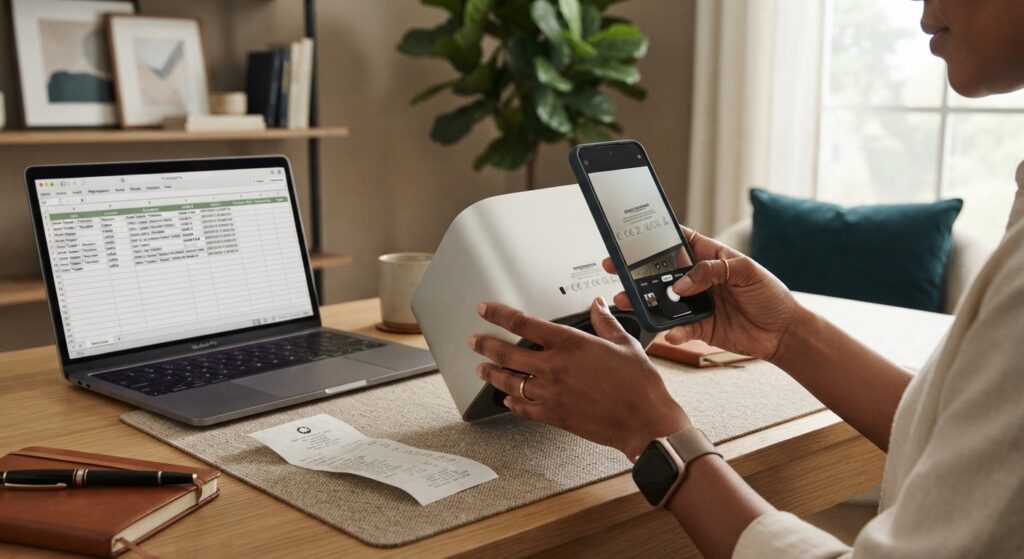
Absolutely.
If you’ve already walked through your home and photographed your belongings, you’re steps ahead. Kudos to you.
The next question is: Are those photographs organized with the information about each item?
When possible, consider having:
- A clear photograph of the item
- A photograph of the serial or model number, when applicable
- A photograph showing where the item normally resides
That last photograph provides context.
If you’re remodeling, moving, selling belongings, or retrieving something from storage, knowing what an item looks like and where it came from can make it considerably easier to identify.
Photographs are most useful when they’re connected to the rest of the item’s information rather than sitting among hundreds of unrelated images on your phone.
Do You Need Receipts for a Home Inventory?
For significant purchases, keeping a digital copy of the receipt is a smart idea.
A receipt can help document what you purchased, when you purchased it, and what you originally paid. Depending on the item, you may also want to keep warranty information, certificates of authenticity, or other supporting documentation with its inventory record.
But remember: purchase price and current value aren’t necessarily the same thing.
Artwork, sneakers, handbags, watches, vinyl records, rare books, wine, sports memorabilia, and other collectibles can change in value over time.
If you have a current professional appraisal or valuation, consider linking or storing that documentation with the item’s inventory record.
I do not provide appraisals or determine the value of clients’ belongings. When a professional valuation is needed, that should be handled by an appropriately qualified professional. My role is helping clients create an organized place to document and maintain that information.
Do You Need to Inventory Everything You Own?
No.
You do not need an individual inventory entry for every spatula, paperback book, or rubber band in your house.
My general rule of thumb is:
If something is easily replaceable, it probably doesn’t need its own individual entry.
If an item would be expensive, difficult, meaningful, or otherwise important to replace or identify, consider documenting it.
Your everyday cutlery? Probably not.
If your cutlery is Cartier? We’re having a different conversation.
And if that rubber-band ball happens to hold a Guinness World Record, I’ll make an exception for that too.
Ultimately, what deserves an individual record depends partly on what is valuable to you. Monetary value matters, but it isn’t the only kind of value something can have.
How Should You Inventory Collections and Valuable Items?

Collections deserve more detailed documentation when the individual pieces have their own identity, rarity, condition, provenance, or value.
Imagine a storage unit containing a significant vinyl collection is burglarized.
“They stole some records” isn’t particularly useful information.
Were some of those records rare or collectible pressings of albums from Michael Jackson, Jimi Hendrix, or Nirvana? Two copies of the same album can look nearly identical to someone who isn’t a collector while having very different histories and values. For vinyl, details such as the artist, album title, year, record label, catalog number, pressing or edition, country of release, and condition can help distinguish exactly which copy you own.
The same principle applies to:
- Wine
- Handbags and designer pieces
- Watches and jewelry
- Sports memorabilia
- Artwork
- Rare books
- Sneakers
- Collectibles
When the individual pieces matter, document the details that distinguish one from another and include photographs and supporting documentation when available.
Should Items in Storage Be Included in a Home Inventory?
Yes.
A “home inventory” doesn’t have to mean only the belongings physically sitting inside your primary residence.
Significant belongings may be kept in:
- A storage unit
- Another residence
- A vacation property
- Temporary storage during a move or renovation
- An off-site facility
Some people also use an inventory system to document professional tools and equipment, technology, or other assets that move between a home, office, storage facility, or job site.
Wherever the item resides, the goal is the same: know what you own and know where it is.
What If You Have a More Complex Household?
Not every home inventory has to manage the same level of complexity.
For some households, the inventory may cover one residence and a relatively straightforward collection of belongings. For others, it may need to account for multiple properties, storage facilities, valuable collections, professional equipment, household staff, frequent relocations, or an executor who may eventually need access to the information.
That’s one reason I don’t believe in treating a home inventory as a rigid, one-size-fits-all document. The system should reflect the way you actually live and the information you need to manage.
The more moving parts your household has, the more valuable it becomes to have one organized source of information rather than relying on memory, scattered receipts, photographs, emails, and files.
Do Renters Need a Home Inventory?
I believe most households can benefit from having an inventory, regardless of whether you rent or own your home.
You could live in a studio apartment or on a 40-acre estate.
If either property is burglarized, the person who lives there still needs to know what belongings were taken and have documentation available to support an insurance claim when necessary.
The size of your home changes how much you may need to document. It doesn’t change the value of having a record of what belongs to you.
Where Should You Store Your Home Inventory?
After putting in the work to create your inventory, don’t let the only copy live on a computer sitting inside your home.
I recommend keeping your inventory in cloud storage and maintaining a separate backup on an external drive.
That gives you redundancy. If one copy becomes inaccessible, lost, damaged, or corrupted, you aren’t starting over.
It’s also worth considering who should have access if you’re unable to provide it yourself.
Depending on your circumstances, that could be a trusted loved one, household manager, executor, or another person you trust with this information.
You may also want to periodically create a separate dated copy of your inventory and include the date in the filename. That gives you a snapshot of your records at a particular point in time.
How Often Should You Update a Home Inventory?
A home inventory is most useful when it reflects what you actually own.
Update your inventory after significant changes, including when you:
- Make a major purchase
- Sell an inventoried item
- Donate something
- Replace an item
- Move an item into or out of storage
- Relocate a significant belonging
I also recommend reviewing your inventory quarterly.
That doesn’t mean everything will change every three months. Some belongings may stay on your inventory for decades.
The quarterly review simply makes maintaining your records a habit. People buy, sell, donate, replace, and relocate belongings throughout the year. A quick review gives you an opportunity to catch changes you may have forgotten to document.
Update as things change. Review quarterly.
The goal is to keep your inventory as current as possible so you stay prepared for your own peace of mind.
Creating a Home Inventory Doesn’t Have to Happen in One Weekend
If you’re reading this thinking, Dafina, this sounds useful, but I really don’t want to spend my entire weekend cataloging my belongings, I hear you.
I really do.
Break it into smaller chunks.
Start with one room. Or one category. Finish that section and move on to another when you’re ready.
Creating the initial inventory is usually the biggest lift. Once you have the foundation, maintaining it becomes much easier.
And if you really, really don’t want to do it yourself?
My Home Inventory Services are designed for people who want help creating and documenting an organized home inventory without having to tackle the entire project alone.
Prefer to DIY? My editable Home Inventory Tracker gives you a framework to start with without locking you into a one-size-fits-all system.
It’s your copy. Doctor it however you need.
Add a column. Change a category. Remove information that isn’t relevant to you. Add fields specifically for your collection, storage unit, move, household, or professional equipment.
Your inventory should work for you.
Once you understand what should be included in a home inventory, the project becomes much easier to break into manageable pieces.
Making a home inventory may never make the list of the sexiest things you’ve done around your house. But once it’s finished, you have an organized record you can maintain, refer to, and use when you need it.
And when that day comes?
Future you will be doing whatever dance is being done at that time.
Frequently Asked Questions About Home Inventories
What is the most important information to include in a home inventory?
At minimum, document the item’s name, location, brief description, and serial or model number when applicable. For significant belongings, consider adding photographs, receipts, purchase information, warranties, appraisals, and other supporting documentation.
Do renters need a home inventory?
Yes. A home inventory documents your belongings, not ownership of the building. Whether you rent a studio apartment or own a large estate, maintaining records of significant belongings can be useful for insurance documentation, moves, storage, and other household transitions.
Should belongings in a storage unit be included in a home inventory?
Yes. Significant belongings stored away from your primary residence should still be documented. Include their current location so your inventory tells you both what you own and where it is.
How often should a home inventory be updated?
Update your inventory whenever significant belongings are purchased, sold, donated, replaced, or relocated. A quarterly review can also help you catch changes you may have forgotten to record.
Do I need to inventory every item in my home?
No. Focus on belongings that would be expensive, difficult, meaningful, or otherwise important to replace or identify. Everyday items that are easily replaceable generally don’t need individual inventory entries.